Yuan Dynasty Ceramics
Introduction
The Yuan Dynasty (1271-1368) represents a significant period in Chinese history marked by cultural interchanges and the fusion of diverse civilizations. This era's ceramics are a testament to the cross-cultural communication that occurred during this time. The Yuan Dynasty is renowned for its robust development in ceramics, most notably the blue-and-white qinghua porcelain. However, it was also a time of innovation across several types of ceramics produced at esteemed kilns throughout China.
Distinctive Features of Yuan Ceramics
Yuan Dynasty ceramics are distinguished by their intricate decorative techniques and the blending of different cultural influences. For example, a notable Yuan ceramic jar features a lid with a mythical creature-shaped knob and a neck adorned with interlocking peonies. The shoulder of the jar displays scrolling vine patterns and large cloud motifs. Four flower-shaped reserve panels girdle the abdomen, each intricately carved with flowers and rocks. The branches and leaves are depicted in blue and white, while the flowers and rocks are rendered in under-glazed red, creating a captivating decorative effect. This jar is part of the permanent collection of the Hebei Museum.
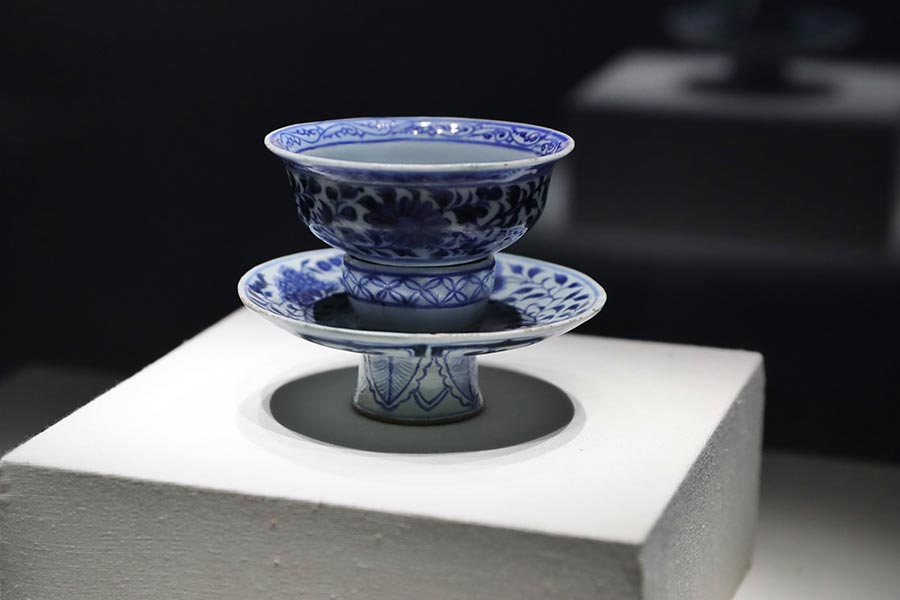
Yuan Dynasty ceramics encompass a wide range of functional items, from tea sets and wine vessels to stationary accessories and everyday utensils. These items reflect not only the practical needs of the era but also the refined tastes of the ancient literati.
Blue-and-White Underglazed Red Ceramic Granary
Another remarkable piece from the Yuan Dynasty is the blue-and-white underglazed red ceramic granary, notable for its unique double-eave hip-roof pavilion structure. This granary, uncovered from Ling’s tomb in Jingdezhen, Jiangxi province in 1974, is decorated with four kinds of glaze, exemplifying the period's superb craftsmanship. The granary's abundant epigraphy reveals the identity of the tomb owner and records local history and folk culture. It is now housed in the Jiangxi Provincial Museum.








